
Whale and Dolphin Watching in Tenerife: How to Choose a Responsible Trip
Updated 29 October 2026 · DoTenerife
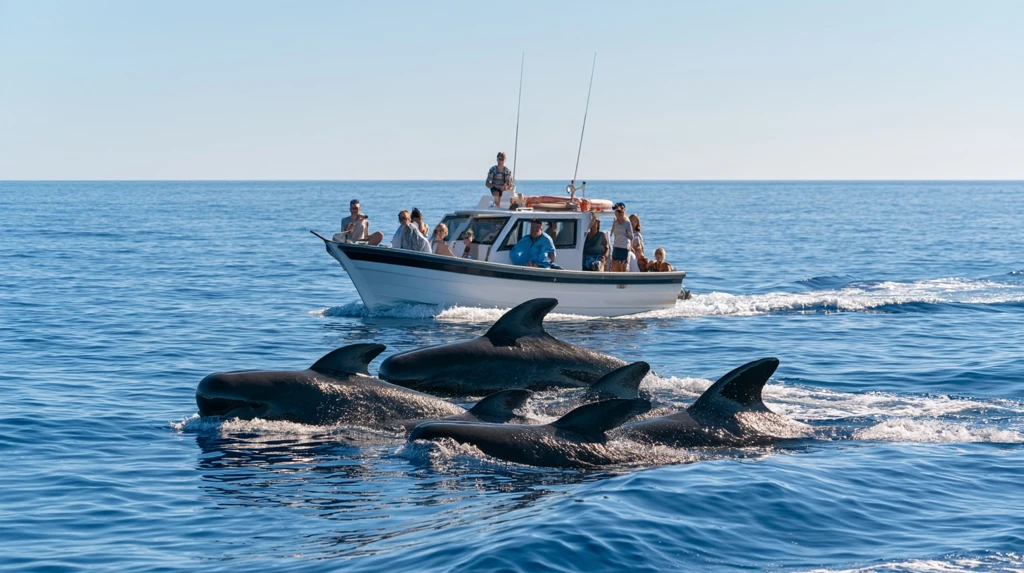
Tenerife is one of the best places in Europe to see whales and dolphins, because a resident population of short-finned pilot whales and bottlenose dolphins lives in the deep channel between Tenerife and La Gomera all year round. Trips leave daily from Puerto Colón, Los Cristianos, Los Gigantes and Las Galletas, typically for two to five hours and roughly €25–€60 per adult. Choose an authorised boat that follows the viewing rules: it’s better for the animals and usually a better experience.
What you’ll see
The waters off the south-west coast are part of a protected marine area (the Teno–Rasca Special Area of Conservation). Up to 21 cetacean species have been recorded around the island.
- Short-finned pilot whales – the stars of most trips. Several hundred are thought to live here year-round, often seen resting at the surface in family groups.
- Bottlenose dolphins – also resident and frequently seen.
- Atlantic spotted, striped and common dolphins – more seasonal.
- Sperm whales, Bryde’s whales and other baleen whales – occasional visitors.
- Loggerhead turtles and seabirds – a common bonus.
Departure ports
| Port | Area | Typical trips |
|---|---|---|
| Puerto Colón | Costa Adeje / San Eugenio | The largest choice: catamarans, yachts, RIBs |
| Los Cristianos | Los Cristianos | Larger boats, some glass-bottom and party cruises |
| Los Gigantes | Los Gigantes | Closest to the whales; trips beneath the cliffs and to Masca Bay |
| Marina del Sur | Las Galletas | Smaller, quieter operators |
From Los Gigantes, the whale grounds are only a short sail away, so trips spend less time travelling.
Types of trip
- Catamaran (2–5 hours) – stable and spacious, often with food, drinks and a swim stop. Good for families and anyone worried about seasickness.
- Sailing yacht (2–3 hours) – small groups, quieter approach, more personal guiding.
- RIB / speedboat (1.5–3 hours) – fast and fun, but bumpier and wetter; not ideal for young children or those with back problems.
- Masca Bay cruise (4–5 hours) – whales plus the Los Gigantes cliffs and a stop at Masca Bay, often with lunch.
- Kayak tours – some operators run guided kayak trips from the west coast where turtles and dolphins are sometimes seen close to shore.
Compare these against other cruises in our Tenerife boat trips guide.
The rules boats must follow
Spanish law sets strict rules for cetacean watching. Authorised boats should:
- Keep a minimum distance of 60 m from the animals.
- Slow to 4 knots or less in the observation area.
- Approach from the side, never head-on or cutting across their path.
- Spend no more than 30 minutes with the same group.
- Limit the number of boats around any one group.
- Never chase, feed or touch the animals, and never allow swimming with them.
- Not fly drones near the animals.
Tenerife has historically recorded a high number of illegal whale-watching reports, so these rules matter.
How to check a boat is authorised
- Ask for the boat’s exact name and its authorisation number for cetacean watching (an AROC authorisation issued by the Spanish Ministry for the Ecological Transition, MITECO).
- Check the name on the official MITECO list of authorised vessels.
- Look for the Barco Azul flag, a yellow flag issued by the Canary Islands Government to boats that meet whale-watching requirements. It’s a positive sign, but local experts note the flag alone isn’t a guarantee of a valid current authorisation.
- Be wary of cheap street touts offering unusually low prices for boats you can’t identify.
If you see an injured or stranded whale or dolphin, call 112.
Choosing a good trip
- Read recent reviews that mention how the boat behaved around the animals, not just the free drinks.
- Smaller is often better. Boats with fewer passengers can approach quietly and everyone gets a view.
- Check what’s included: food, drinks, snorkelling gear, hotel pick-up.
- Morning trips often have calmer seas.
- Seasickness: take tablets beforehand if you’re prone. Catamarans are the most stable.
Practical tips
- Bring sun cream, a hat, a light layer and a towel if there’s a swim stop.
- Children usually love these trips; most catamarans accept babies and toddlers, while RIBs often have age minimums. See our Tenerife with kids guide.
- Book a day or two ahead in winter and school holidays.
- Combine an afternoon trip with an evening in Los Gigantes or Los Cristianos. The Los Gigantes area page shows what’s on nearby tonight.
Frequently asked questions
Are you guaranteed to see whales in Tenerife?
No trip can guarantee sightings, but the odds are high. Short-finned pilot whales and bottlenose dolphins live off the south-west coast all year, and reputable operators see them on most trips.
When is the best time for whale watching in Tenerife?
Any time of year, because the main species are resident. Seas are usually calmest in summer and early autumn, and migrating species such as sperm whales or baleen whales are sometimes seen in spring and autumn.
How much does whale watching cost in Tenerife?
Shared trips typically range from roughly €25 to €60 per adult depending on length, boat type and whether food and a swim stop are included. Small-group sailing and private charters cost more.
How do I know if a whale-watching boat is licensed?
Ask the operator for the boat's exact name and its authorisation number for cetacean watching, then check it against the official Spanish government (MITECO) list. The yellow Barco Azul flag is a good sign but isn't proof on its own.
Can you swim with dolphins in Tenerife?
Not with wild ones. Swimming with, feeding or touching whales and dolphins during watching trips is prohibited. Many trips include a separate swim stop in a bay away from the animals.